01 · Context
A startup with a clear vision — and nothing else
Int-Learn had a compelling idea: match high school students preparing for SAT/ACT with college graduate tutors from elite universities. The credibility angle was clear. The product structure was not. When the project began, there was no IA, no wireframes, no brand, no copy — just a founder's vision and a blank Sketch file.
This kind of zero-to-one challenge is where UX strategy matters most. Before a single screen could be designed, the platform's entire logic had to be invented — two user roles, two sets of goals, one coherent system that serves both without compromise.
Starting Point
Zero IA, zero wireframes, zero brand
Dual Platform
Student-facing + educator-facing, one product
Full Scope
UX + UI + brand identity + product copy
02 · Two Users, Two Worlds
One platform serving completely different motivations
A two-sided marketplace lives or dies by how well it serves each side. Students and educators come to Int-Learn with opposing mental models — one looking for trust and certainty, the other looking for autonomy and opportunity. Every design decision had to honour both simultaneously.
Core anxiety"How do I know this tutor is actually good?"
- Need verifiable tutor credibility before committing
- Want subject-specific matching — not just "any tutor"
- Require practice tests with real time pressure and instant results
- Parents often involved in platform decisions
Core motivation"I want flexibility and fair pay on my own terms"
- Job-transitioning or repaying student loans
- Want to set their own rates and availability
- Prefer minimal admin overhead — just teach and get paid
- Value the credibility signal of their university brand
03 · UX Strategy
Three decisions that shaped the whole design
Before touching UI, I mapped the platform logic. The key strategic question in a tutor marketplace is always trust — how does a student believe a stranger online is worth their time and money? The answer shaped the entire information architecture.
College Badges as Trust Currency
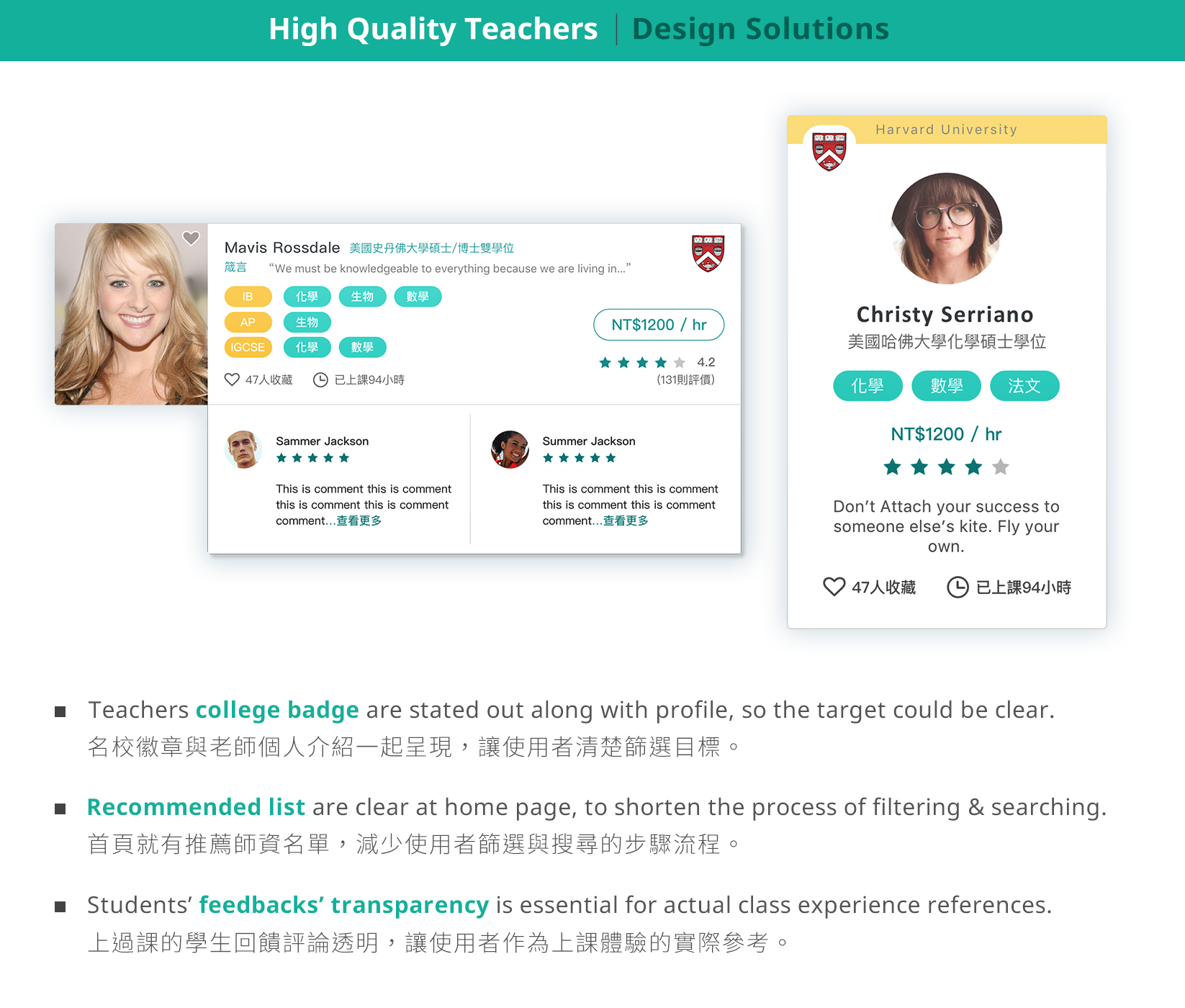
Rather than star ratings or reviews (easily gamed), the core credibility signal is the tutor's university — a verifiable, legible fact that parents and students immediately understand. The college badge is the first thing visible on every tutor card.
IA Before Wireframes
With no existing structure, I spent the first phase mapping every page type across both user roles before opening a design tool. The result: 40+ page types with clear ownership, hierarchy, and state logic — preventing chaos in the build phase.
Asymmetric Power, Symmetric Respect
Students choose tutors — so students hold more power. But the design never makes educators feel second-class. Tutors own their rates, their schedule, and their subject range. The product respects both sides as equal contributors to the marketplace.
Zero-to-one design note
Starting from nothing meant every page structure, every label, and every flow had to be invented. I also wrote the initial product copy — there was no copywriter on the team. Tone: warm but credible, approachable but not informal.
04 · Student Experience
Designed to reduce anxiety at every step
The student journey has one overriding goal: arrive at the right tutor with enough confidence to book. Each feature is a trust-building layer — eliminating doubt before it can block a decision.
Trust Architecture
Find the Right Tutor — Credibility First
The tutor discovery page leads with the university badge — not the name, not the rating. Students (and their parents) make snap judgements on academic credibility, so it's the first signal they see. Below the badge: subject tags, hourly rate, and a hover-preview card for fast scanning without clicking away.
- College badge prominently displayed on every tutor card
- Recommended lists reduce filter decision fatigue
- Hover-card preview: availability + subjects before committing to a profile
Precision Matching
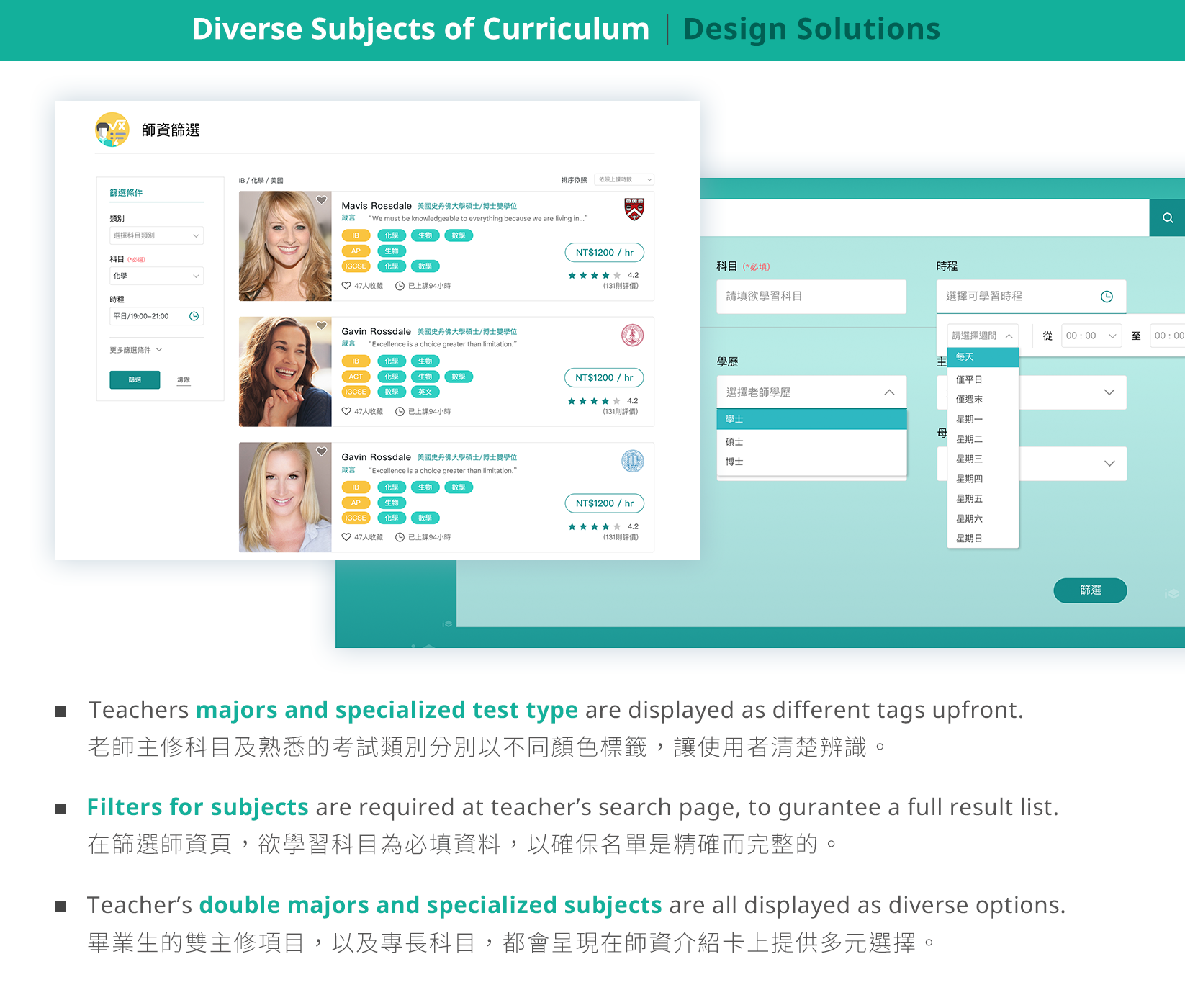
Browse by Subject — Filter by Major
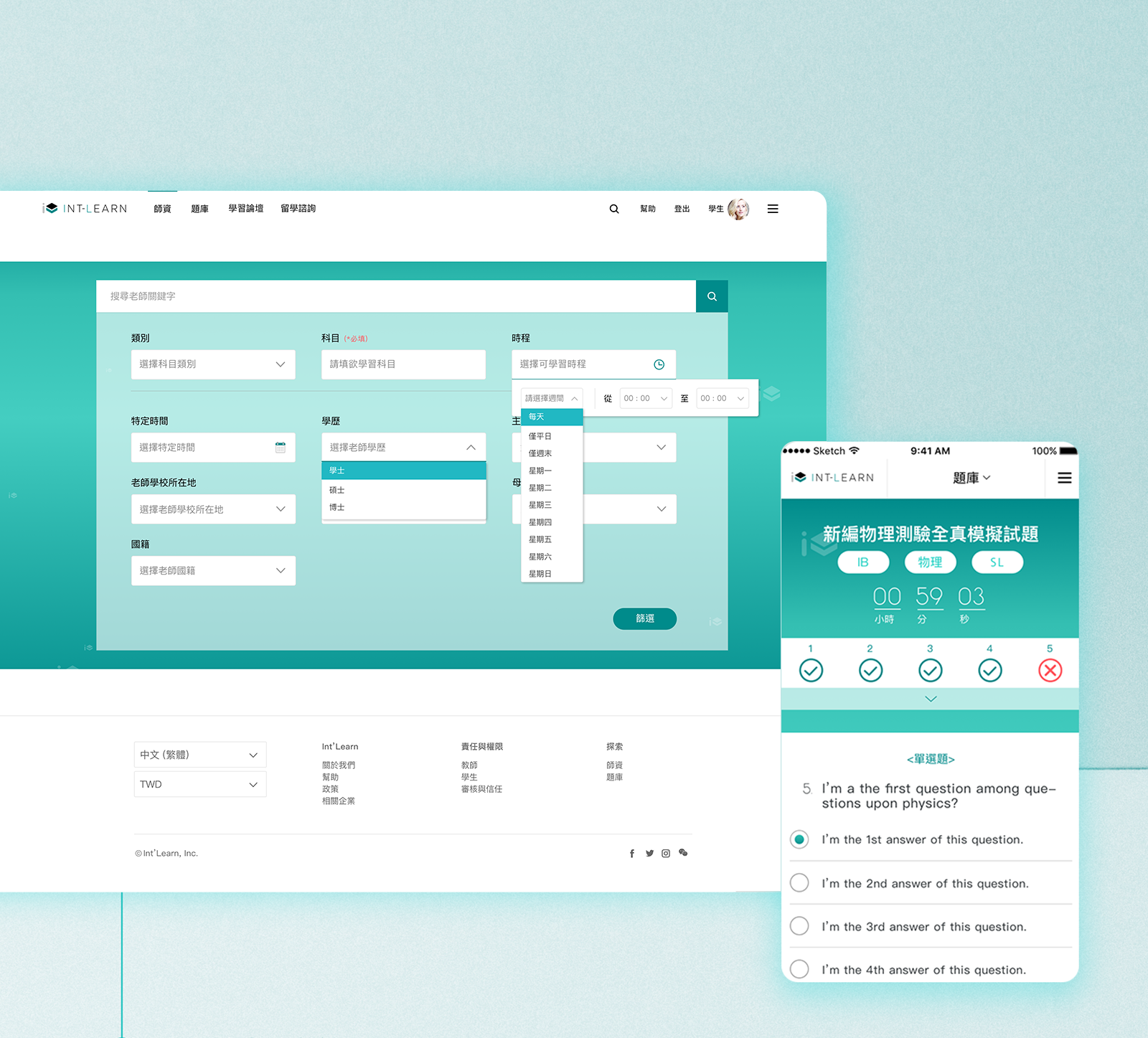
Students preparing for specific SAT subject tests need a tutor who specialises — not just someone who "teaches math." The curriculum filtering system uses subject tags as the primary sort, with a double-major filter that surfaces tutors with multiple specialisations for complex test prep needs.
- Subject tag filtering as primary navigation
- Double-major filter for students who need cross-subject tutoring
- Alternate speciality options surface tutors who match adjacent subjects
Measurable Progress
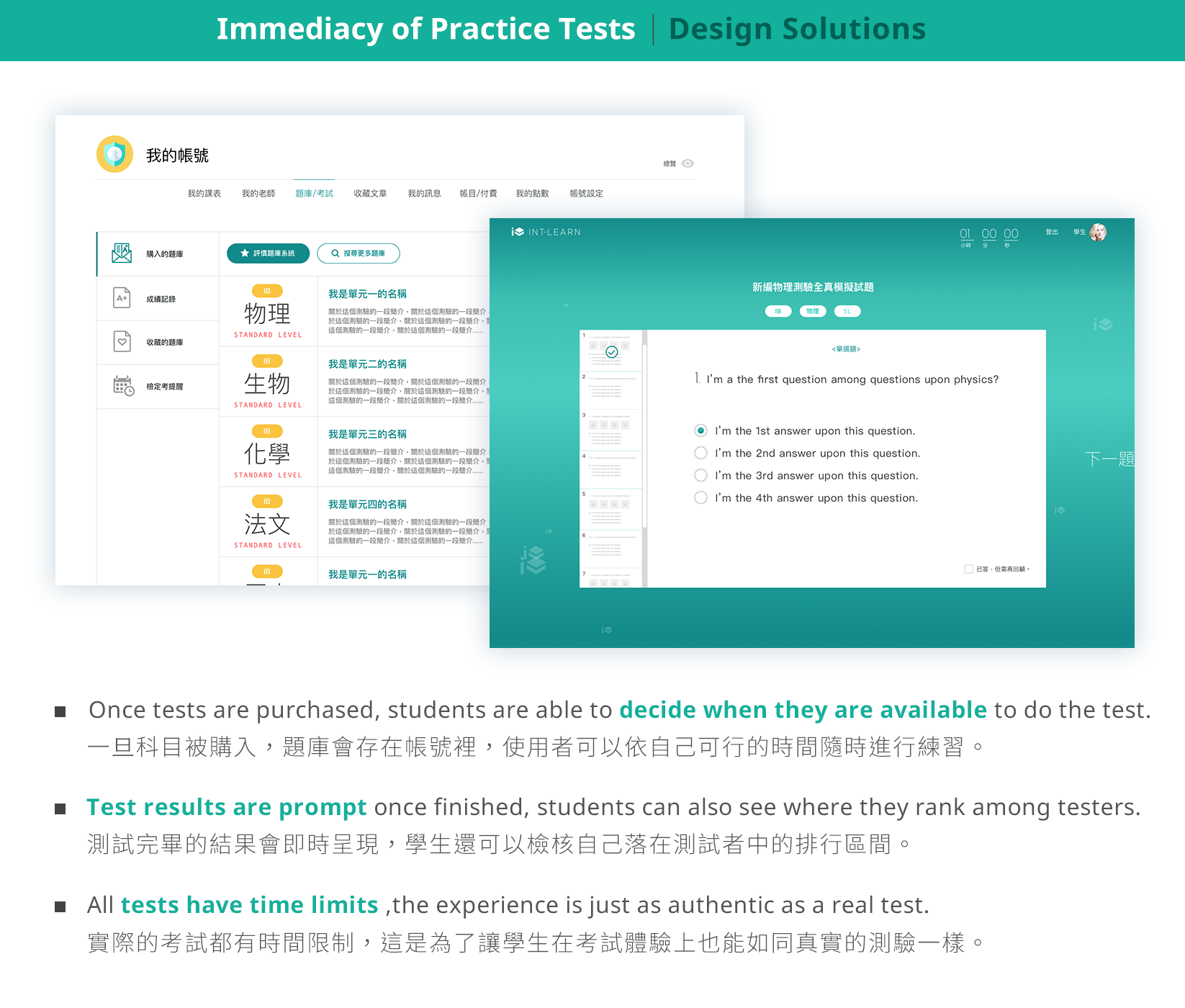
On-Demand Practice Tests — Score & Compare
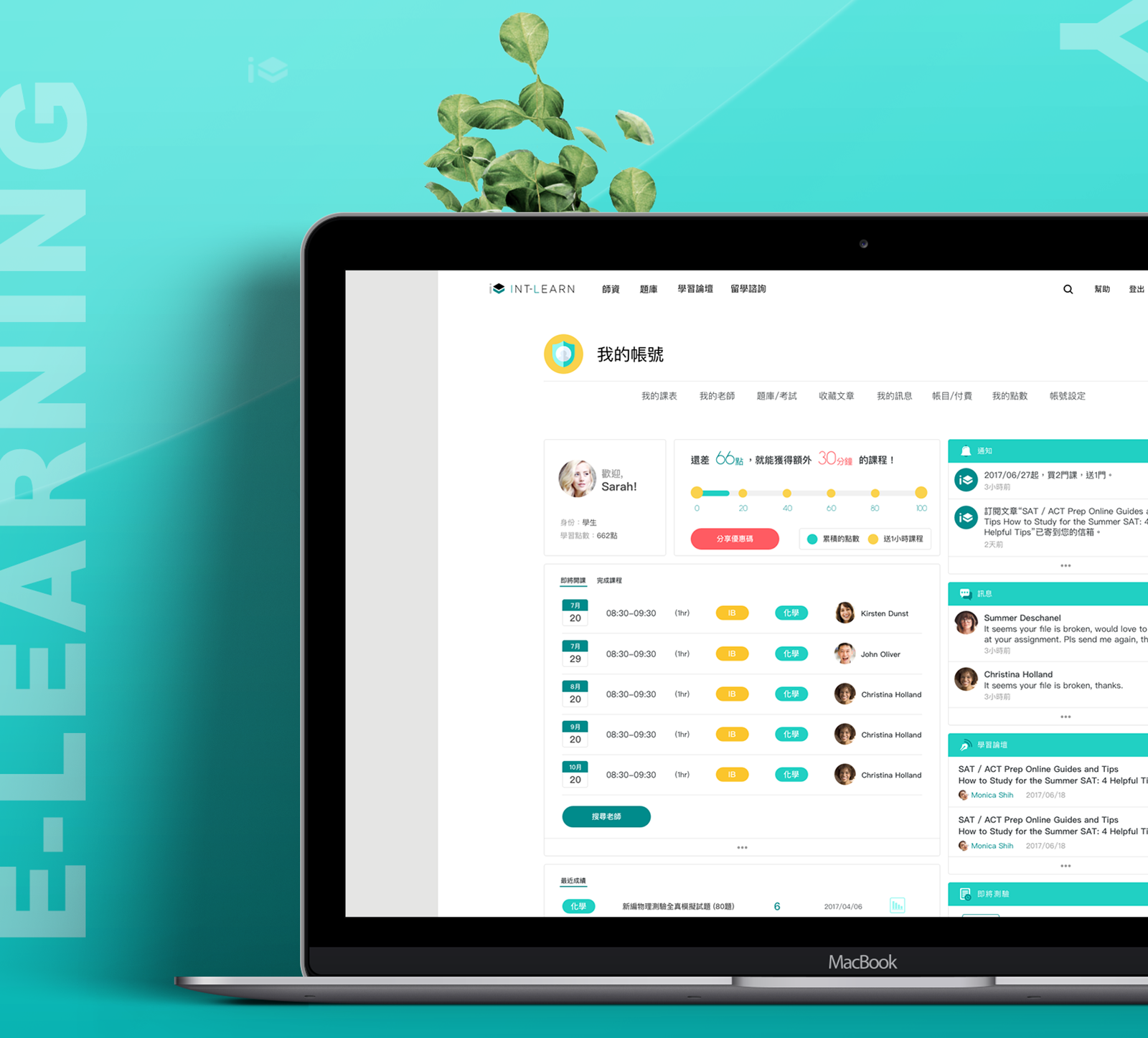
Practice tests are the clearest measure of whether tutoring is working. Students can launch a timed test at any point — not just during scheduled sessions — with authentic time constraints matching real SAT/ACT conditions. Instant results and historical comparison data make progress visible and motivating.
- On-demand access — not gated behind scheduled sessions
- Authentic time pressure matching actual test conditions
- Instant score results with historical comparison chart
05 · Educator Experience
Autonomy as the core design value
College graduates join Int-Learn because it offers flexibility that traditional tutoring agencies don't. The design reinforces this at every touchpoint — educators set their own terms, own their schedule, and manage their content. The platform is a tool, not a boss.
Economic Independence
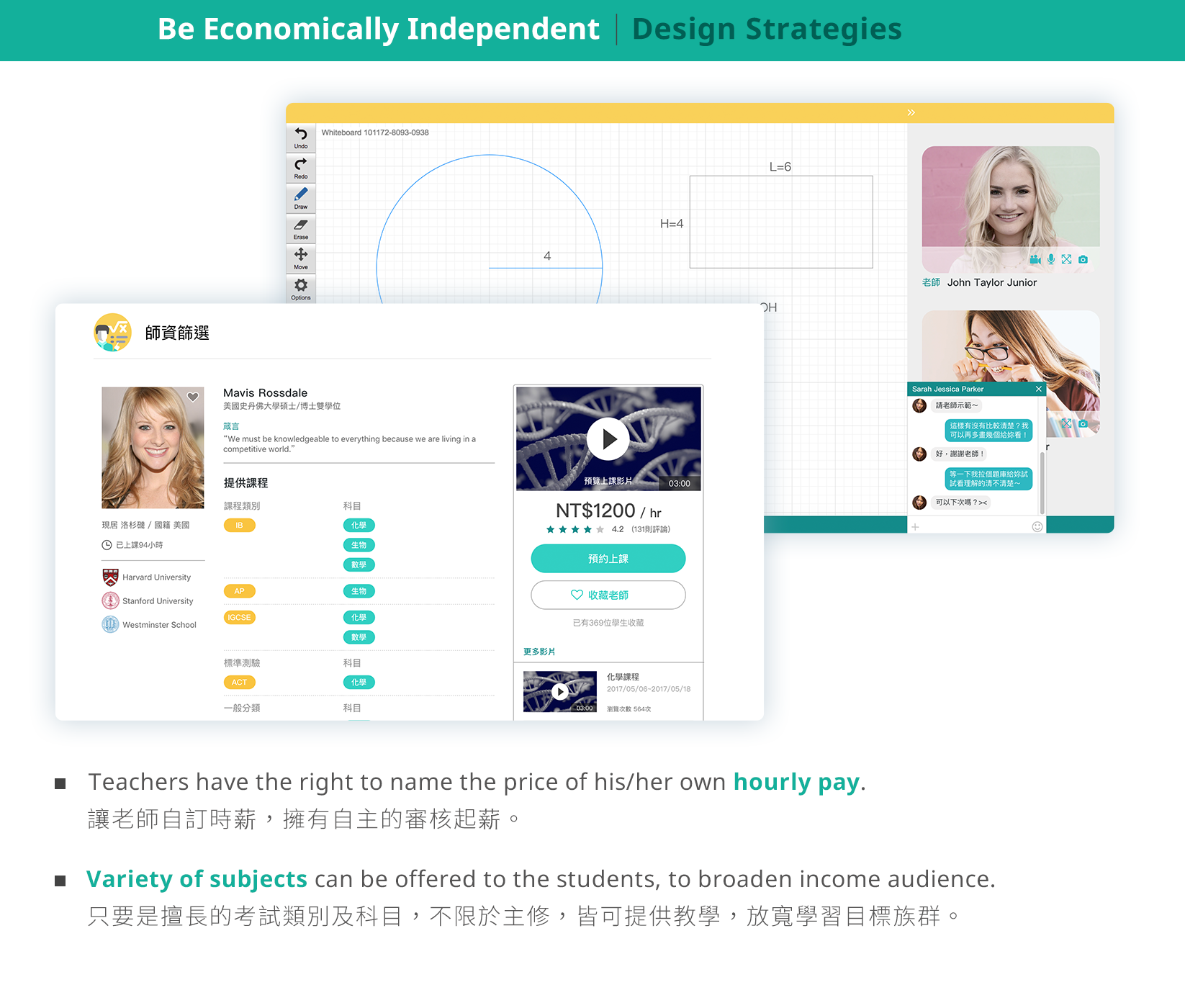
Set Your Own Rate — Own Your Subject Range
Tutors set their own hourly rate — a non-negotiable design requirement from the earliest discovery sessions. Beyond pricing, tutors select their active subject specialisations, creating a self-managed profile that reflects exactly what they're willing and able to teach. No fixed rate cards, no mandatory curriculum.
- Custom hourly rate input with no platform-imposed ceiling
- Multi-subject badge selection — breadth or depth, tutor's choice
- Transparent earnings display per session and monthly
Flexible Schedule
Customisable Availability — Draft Content Tools
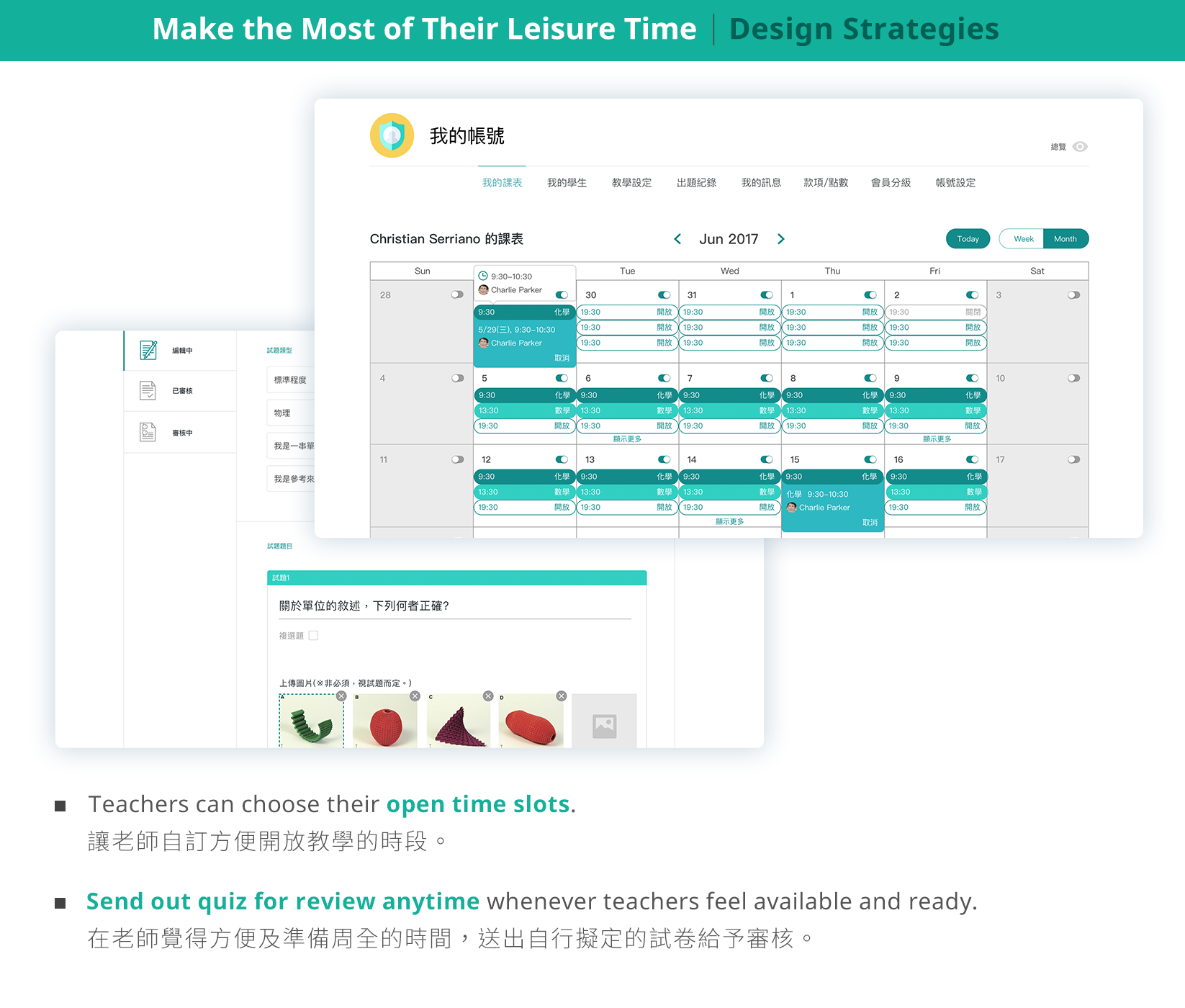
Scheduling is the most common friction point in tutoring marketplaces. Tutors here set availability by day and time block — not a fixed weekly calendar — accommodating the irregular schedules of people who are also working full-time jobs or studying. Draft quiz creation lets tutors build test content on their own timeline.
- Availability set by day-of-week + time block — not fixed slots
- Draft quiz creation tool with save and review states
- Booking request approval flow — tutors retain final say